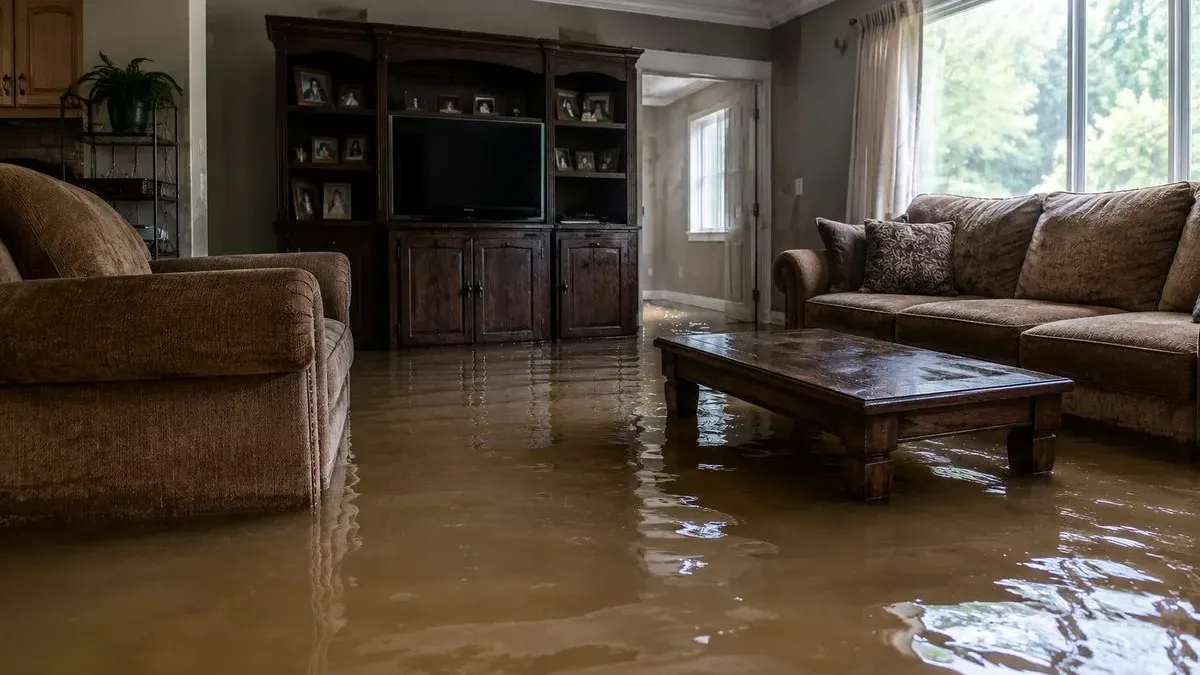
If you've ever dealt with a soaked floor, a ruined basement, or a waterlogged wall, you've probably heard both terms thrown around — "flood damage" and "water damage." They sound like they mean the same thing. They don't. And if you're a Wichita homeowner trying to figure out what happened to your property — or what your insurance covers — that distinction matters more than you'd think.
Here's a plain-language breakdown of what separates the two, why it affects your claim, and what to do when water shows up where it shouldn't.
What Is Water Damage?
Water damage refers to destruction caused by water that originates inside your home or from above. Common culprits include:
- A burst or leaking pipe
- An overflowing washing machine or dishwasher
- A roof leak after a heavy storm
- A water heater that gives out
- A backed-up toilet or drain
The key distinction: the water comes from an internal source or directly hits your home from the sky. This type of damage is typically covered under a standard homeowner's insurance policy — though you'll want to read the fine print and check with your adjuster.
What Is Flood Damage?
Flood damage, in insurance and restoration terms, refers specifically to water that comes from an external natural source and affects multiple properties or a wide area. Think:
- Rising rivers or creeks after heavy rainfall
- Storm surge or overland flooding
- Groundwater flooding from saturated soil
- Flash flooding that pushes water into your home through doors, windows, or the foundation
Here's the thing most Wichita homeowners don't realize until it's too late: standard homeowner's insurance does NOT cover flood damage. Flood coverage requires a separate flood insurance policy, typically through the National Flood Insurance Program (NFIP) or a private carrier.
Why the Difference Matters in Kansas
Wichita sits in the Arkansas River basin and sees its share of intense spring storms, rapid snowmelt, and the occasional severe weather event that sends water rushing where it shouldn't be. The city has experienced flash flooding events that caught homeowners completely off guard — and many discovered their policies left them holding the bill.
Even if water entered your home during a storm, the source of that water determines how it's categorized. Rain that blows in through a broken window? Probably water damage. A creek that backed up and flooded your yard and crawl space? That's a flood — and a different insurance conversation entirely.
If you're unsure which applies to your situation, a licensed public adjuster can help you interpret your policy. But the restoration side of things? That's where we come in, regardless of the cause.
The Restoration Process Is Similar — But the Stakes Are
Different
Whether you're dealing with water damage restoration from a ruptured supply line or flood damage from an overflowing creek, the response process has a lot of overlap:
- Immediate extraction of standing water
- Structural drying using industrial dehumidifiers and air movers
- Moisture mapping to find hidden water in walls, subfloors, and ceilings
- Mold prevention — because mold can start forming within 24–48 hours
- Content and structural assessment for what can be saved vs. what needs to go
Where flood damage gets more complex is in the scope — flooding often affects a broader area, introduces contaminated water (called Category 3 or "blackwater"), and can compromise your foundation or crawl space in ways that aren't immediately visible.
That's exactly why vapor barrier installation and crawl space protection are part of what a full-service restoration company handles. It's not just about drying what you can see.
Don't Wait to Find Out Which One It Is
The biggest mistake homeowners make? Waiting on the insurance question before calling a restoration company. Water doesn't wait. Every hour it sits, it works deeper into your flooring, framing, and drywall — and the mold clock starts ticking.
Good To Be Clean has been serving the Wichita area and surrounding Kansas communities since 2012. We show up 24/7, assess the damage honestly, and get to work — whether it's a leaky pipe or a post-storm disaster. Check out our full restoration services or call us directly at (316) 320-6767 if you need help now.
Water damage or flood damage — we handle both. And we'll help you understand exactly what you're dealing with from the moment we walk through the door.
Dealing with water in your Wichita home? Don't wait it out. Call Good To Be Clean at (316) 320-6767 for 24/7 emergency response. We'll assess the damage, explain your options, and get your home back to normal — fast.