
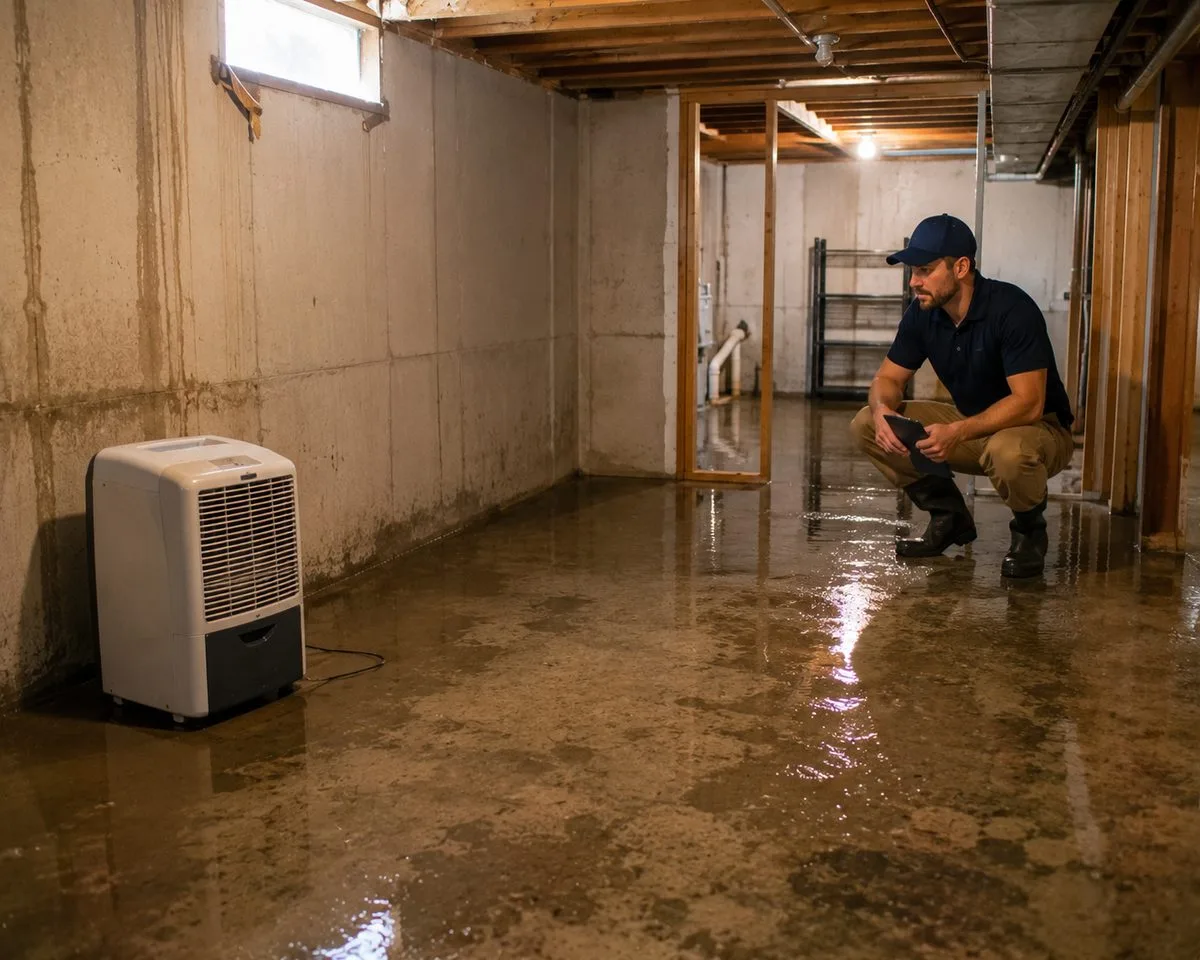
Your Basement Is Flooded. Now What?
It doesn't matter if it's a spring storm, a burst pipe, or a backed-up sewer line — a flooded basement is one of those problems that demands immediate action. Every hour you wait, water is soaking deeper into your walls, subfloor, and framing. Mold can start forming in as little as 24–48 hours.
If you're dealing with a flooded basement in Wichita, KS right now, here's what to do — in order.
Step 1: Make Sure It's Safe to Enter
Before you touch anything, cut power to the basement at your breaker box. Water and live electricity are a deadly combination. If the flooding is severe or you're not sure where your electrical panel is relative to the water, don't go in — call a professional.
Also check for structural issues. If walls are bowing or the floor feels unstable, get out and call for help.
Step 2: Identify and Stop the Source
You can't dry what's still getting wet. Figure out where the water is coming from:
- Heavy rain/storm surge — likely coming through a window well or foundation crack
- Sump pump failure — common in Wichita homes during spring storms
- Burst or leaking pipe — shut off your main water supply immediately
- Sewer backup — do not enter without proper PPE; sewage water is a biohazard
Once the source is addressed, you can start the extraction process.
Step 3: Remove Standing Water
The faster you get the water out, the better. Options:
- Wet/dry shop vac — good for small amounts (under an inch)
- Submersible pump — rent one from a local hardware store for larger floods
- Mop and buckets — only practical for very minor flooding
Work from the edges toward the drain or lowest point. Don't push water toward finished walls or carpeted areas if you can avoid it.
Step 4: Pull Wet Materials Out
Once standing water is removed, anything that absorbed moisture needs to come out:
- Wet carpet and padding — these don't dry in place; they trap moisture and grow mold
- Cardboard boxes and stored items — move them out to dry or dispose of them
- Rugs, furniture, anything sitting on the wet floor
Don't try to salvage carpet padding. It's cheap to replace and near-impossible to dry properly in place.
Step 5: Dry Everything — Aggressively
This is where most DIY efforts fall short. You need airflow and dehumidification working together:
- Box fans or air movers pointed at walls and floor
- Dehumidifier running continuously — empty it regularly or set up a drain hose
- Open windows if outdoor humidity is low (check the forecast — Wichita summers can be brutal for humidity)
Plan on running equipment for 3–5 days minimum for a modest flood. Check for moisture in walls using a moisture meter if you have one. Drywall that absorbed water often needs to be cut out and replaced even if it looks dry on the surface.
Step 6: Clean and Treat for Mold
Once surfaces are dry, treat them. Wipe down concrete walls and floors with a diluted bleach solution or an EPA-registered antimicrobial. If you had any sewage involvement, don't skip this step — and consider calling a pro.
Check back over the next week. If you see discoloration, smell a musty odor, or notice paint bubbling, you likely have mold starting to grow and need professional remediation.
When DIY Isn't Enough
There's a point in every basement flood where the scope of damage exceeds what fans and a shop vac can handle. That's especially true when:
- Water has been sitting for more than 24 hours
- Drywall, insulation, or framing is saturated
- You had sewage or contaminated water
- You're seeing signs of mold growth
At that point, professional water damage restoration equipment makes a real difference — industrial air movers, commercial dehumidifiers, and moisture mapping tools that find hidden wet spots before they become a bigger problem.
We're Local — and We're Ready
Good To Be Clean has been handling flooded basements across the Wichita area since 2012. We're available 24/7 because floods don't happen on a schedule. If your basement is underwater right now, don't wait to see if it dries on its own.
Call us at (316) 320-6767 or learn more about our water damage restoration services. We'll walk you through your options — no pressure, just straight answers from people who do this every day.