A pipe bursts at 2 a.m. The washing machine overflows. A spring storm sends water pouring into your basement. Whatever the cause, water damage is one of the most stressful things a homeowner can face — and in the immediate aftermath, it's hard to know what comes next.
If you're in the Wichita area and you're dealing with water damage right now (or just want to be prepared), this guide walks you through exactly what the water damage restoration process looks like — from the first phone call to the final walk-through.
Step 1: Emergency Contact & Initial Assessment (Hours 1–2)
The clock starts the moment water enters your home. The faster you act, the less damage you'll end up with.
When you call a restoration company, expect them to ask about the source of the water, how long it's been standing, and what areas of your home are affected. A reputable team — like Good To Be Clean, which serves Wichita and surrounding communities — will get someone on-site as quickly as possible.
Once there, technicians will:
- Identify the water source and confirm it's stopped
- Categorize the water (clean, gray, or black — each affects the cleanup approach)
- Use moisture meters and thermal imaging to map the full extent of damage, including hidden moisture behind walls
Don't skip this step. Water travels farther than it looks, and hidden moisture is what leads to mold down the road.
Step 2: Water Extraction (Hours 2–6)
This is the most urgent phase. Industrial truck-mounted or portable extractors pull standing water out of carpets, subfloors, and hard flooring fast.
The goal here is simple: get the bulk of the water out before it soaks deeper into structural materials. The longer water sits, the more categories of damage expand — and the more your insurance claim can escalate.
For significant flooding events, expect this phase to take a few hours depending on the volume of water involved.
Step 3: Drying & Dehumidification (Days 1–5)
Once the water is extracted, the drying phase begins — and this is where patience matters.
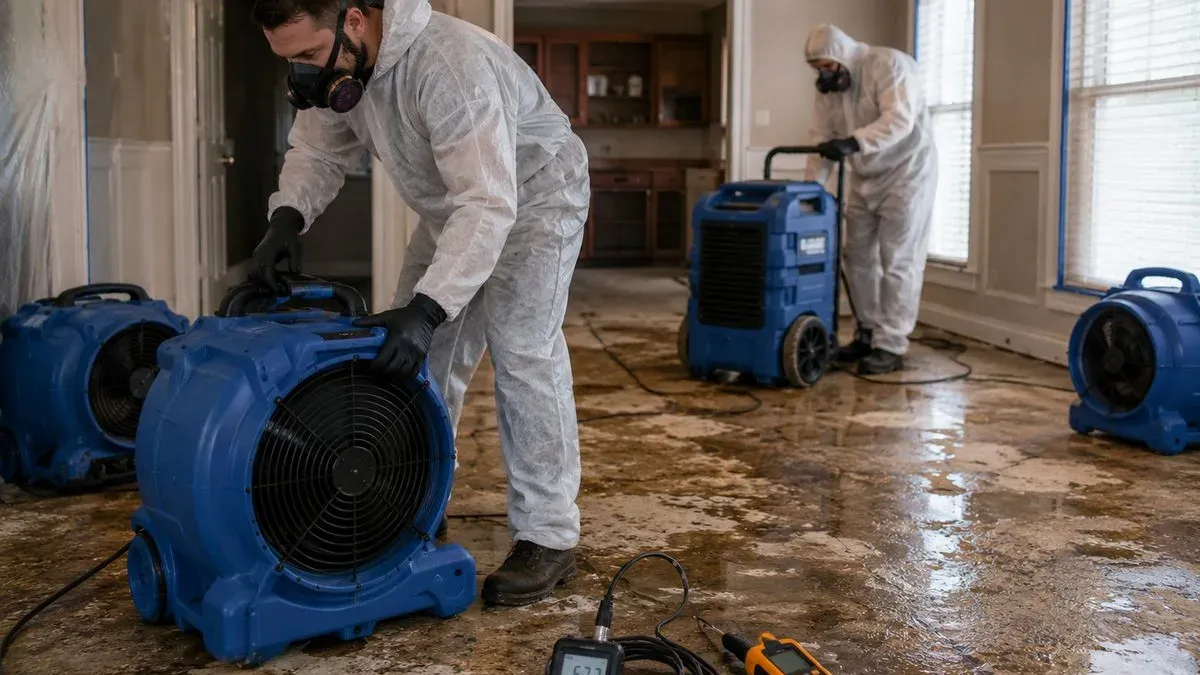
Technicians place high-velocity air movers and commercial dehumidifiers throughout the affected areas. These aren't household fans. Industrial drying equipment moves significant volumes of air and pulls moisture directly out of wall cavities, subfloors, and structural framing.
Your home will be monitored daily. Technicians check moisture readings and adjust equipment placement to ensure everything is drying evenly and on track. Most residential jobs reach drying goals within 3 to 5 days, though larger losses or homes with concrete slabs can take longer.
What Happens to My Belongings?
Furniture, rugs, and salvageable items are typically moved to dry areas or documented for insurance. Some items may be taken off-site for specialized drying and cleaning.
Step 4: Cleaning, Sanitizing & Mold Prevention (Days 3–7)
Once moisture levels normalize, affected surfaces are cleaned and sanitized. If the water source was contaminated (sewage backup, floodwater), antimicrobial treatments are applied to prevent bacterial growth.
This is also when the team evaluates whether any mold has begun developing. Kansas homes — particularly basements and crawl spaces — are susceptible. If there are signs of early mold growth, professional mold remediation should happen before any reconstruction begins. Trying to skip ahead to repairs without addressing mold is a costly mistake.
Step 5: Restoration & Reconstruction (Days 5–21+)
The final phase is making your home look like it never happened. Depending on the severity of the damage, this could mean:
- Replacing drywall, insulation, and flooring
- Repainting walls and ceilings
- Repairing or replacing cabinetry, trim, and fixtures
Minor losses might wrap up in under a week. Significant structural damage — especially after a major flooding event — can take two to four weeks or more. A good contractor keeps you informed throughout and coordinates directly with your insurance adjuster to streamline approvals.
A Few Things Wichita Homeowners Should
Know
- Act fast. Mold can begin developing within 24–48 hours of water exposure.
- Document everything. Photos and videos before cleanup begins are essential for insurance claims.
- Don't just dry the surface. A dry floor doesn't mean dry framing. Moisture meters don't lie — visible dryness does.
- Choose a team that does it all. Companies that handle both emergency mitigation and reconstruction eliminate the communication gaps that delay your recovery.
Ready to Get Started?
Good To Be Clean has been helping Kansas homeowners through water damage since 2012 — with 200+ five-star reviews and 24/7 availability because emergencies don't follow a schedule.
If you're dealing with water damage in Wichita or anywhere in Butler County, call us now at (316) 320-6767 or visit our water damage restoration page to learn more about how we work. We'll walk you through every step — starting with getting someone to your door fast.